
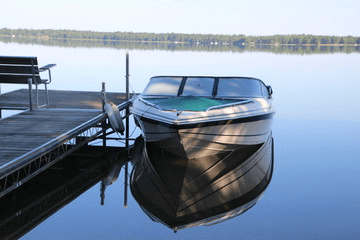
Dock layout determines how you use your shoreline every day. The design influences boat access, swimming space, stability in changing water levels, and future expansion. A well-planned dock supports both recreation and long-term property value.
Many waterfront owners begin with a basic idea of what they want, yet shoreline conditions often guide the final decision. Water depth, lakebed composition, wave exposure, and available shoreline width all shape the best dock layout for a property.
Straight docks, L-shape docks, and platform docks each serve a different purpose. Understanding how each configuration works helps you plan a dock that fits your lakefront rather than forcing a design that works against natural conditions.
Start with Your Shoreline Conditions
Before selecting a dock layout, assess how the shoreline behaves through the season. Alberta lakes shift with rainfall, runoff, and snowmelt. Shoreline depth and lakebed stability affect both dock placement and boat lift positioning.
Important factors include:
- Distance from shore to safe boat depth
- Seasonal water level changes
- Slope of the lakebed
- Wind and wave exposure
- Available shoreline space
These conditions influence how long the dock needs to extend and where turning space for boats must be located.
A dock design that matches these conditions supports stability, safe watercraft access, and long-term durability. You can also plan your dock layout in advance to better understand how the design will work with your shoreline conditions.
Straight Docks: Simple and Effective Access
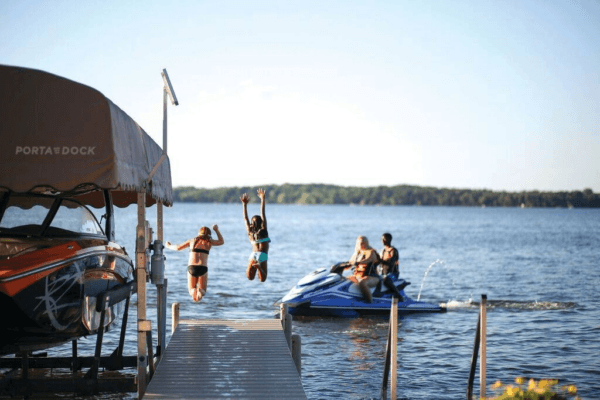
Straight docks remain the most common layout for lakefront properties. The design extends directly outward from the shoreline and provides clear access to deeper water.
This layout works best when the shoreline has a gradual slope and consistent depth. Boats approach the dock from either side while swimmers enter the water along the length of the structure.
Advantages of straight docks include:
- Efficient use of shoreline space
- Simple installation and seasonal removal
- Easy expansion by adding additional sections
- Clear pathways from shore to watercraft
Straight docks also work well for properties that rely on boat lifts placed beside the dock. The open sides allow watercraft to approach from multiple directions.
However, this layout provides limited gathering space. If the dock functions as a social area or swim platform, additional sections may be required.
L-Shape Docks: Added Boat Protection and Stability
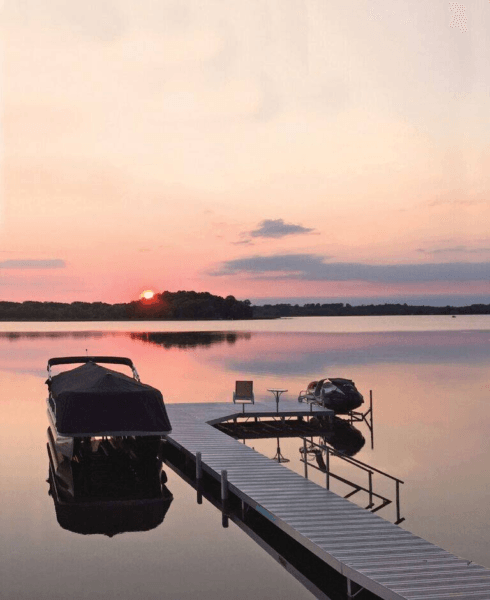
L-shape dock layouts introduce a perpendicular section at the end of a straight dock. This design creates a protected corner where boats can moor more safely.
The L configuration improves stability in moderate wave conditions. The perpendicular section acts as a barrier that reduces wave energy reaching the boat lift or tie-up area.
Benefits of L shape dock Alberta installations include:
- Dedicated boat mooring space
- Protection from cross-waves
- Clear separation between swimming and boating areas
- Additional walking space at the dock end
Many lakefront owners choose L-shape layouts when they want both watercraft access and recreational space on the dock.
The design also creates an ideal location for installing a boat lift or personal watercraft lift inside the protected corner. This arrangement reduces movement caused by waves or passing boats.
When combined with modular dock systems, L-shape docks allow flexible expansion if additional sections are needed later.
Platform Docks: Built for Gathering and Recreation
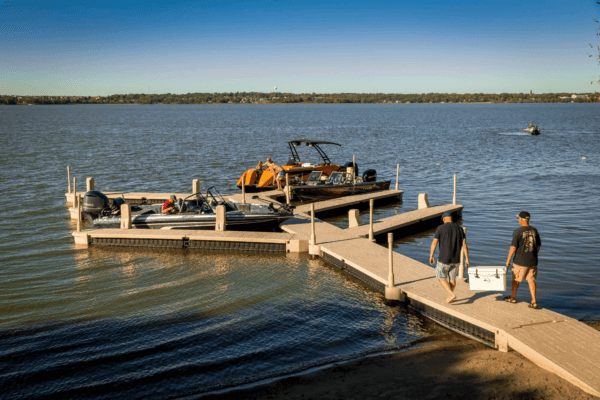
Platform dock layouts add a wider section at the end of the dock. The structure creates an open area designed for swimming, relaxing, and social gatherings.
This configuration works well for lakefront properties where the dock serves as a primary outdoor living space.
Common uses for platform dock sections include:
- Swim access points
- Seating areas
- Ladder installations
- Fishing space
- Kayak or paddleboard launch points
Platform docks support multiple activities at the same time. Swimmers use one side of the dock while boats remain moored along another edge.
The additional width also improves overall dock stability. A larger footprint spreads weight evenly across the structure, reducing movement in moderate wave conditions.
For lakefront owners who treat the dock as an extension of their outdoor living area, platform sections provide the most flexibility.
Planning for Boat Lifts and Watercraft Access
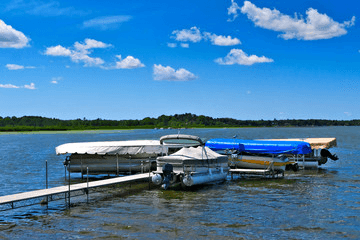
Dock layout and boat lift placement must work together. Boat lifts require specific water depth, alignment, and entry angles.
When planning a custom dock layout, consider:
- Boat length and width
- Lift placement relative to prevailing wind
- Turning space for safe approach
- Distance between dock sections and lift structure
Straight docks often position lifts along the outside edge. L-shape docks place lifts within the protected corner created by the perpendicular section.
Platform docks may include multiple lift placements depending on the size of the structure.
Matching dock layout with lift positioning improves docking safety and reduces mechanical stress on lift equipment.
Allow Space for Future Expansion
Waterfront usage often changes over time. Families add watercraft, children grow into boating activities, and entertaining space becomes more important.
A modular dock design allows sections to expand without replacing the entire structure.
Planning space for future additions helps avoid expensive redesigns later. Many waterfront owners begin with a straight dock and later add:
- platform sections
- perpendicular extensions
- additional lift spaces
Designing with expansion in mind supports long-term waterfront flexibility.
Plan Your Dock Layout with Local Waterfront Expertise
If you’re evaluating dock layout options in Alberta or planning a custom dock layout, the team at Beachside Docks can help design a system tailored to your shoreline and watercraft needs.
Contact Beachside Docks today to start planning a dock layout that supports safe access, reliable boat docking, and comfortable waterfront living.