

Alberta lakefront ownership comes with one consistent variable: fluctuating water levels. Spring runoff can raise lake depth quickly, while late summer heat, evaporation, and fall drawdowns often reduce shoreline depth significantly. These shifts create real structural and operational challenges for boat lift systems that were designed with deeper, more consistent water in mind.
When depth decreases, lift frames sit closer to the lakebed, crossmembers lose clearance, and mechanical components absorb strain they were not engineered to handle. Over time, that stress affects performance, stability, and longevity. For many waterfront properties across the province, a Porta Dock shallow water lift provides a structural advantage over a conventional standard boat lift because it is designed specifically for limited-depth environments.
Understanding Shallow Water Conditions on Alberta Lakes
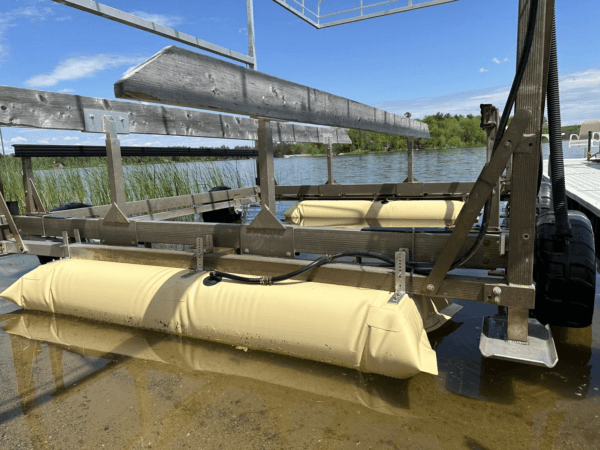
Many Alberta lakes feature gradual shoreline slopes rather than immediate drop-offs. While this creates attractive beach-style access, it limits usable depth near docks and boat lift placements. In late summer and early fall, the situation becomes more pronounced as water levels recede.
Shallow water conditions typically involve:
- Reduced clearance between lift structure and lakebed
- Soft or silty bottom composition
- Seasonal water level fluctuation
- Uneven lakebed grades
A standard lift often assumes adequate depth to achieve full lifting height without structural interference. When installed in limited depth, those assumptions create restrictions. Height adjustments become constrained, loading angles become tighter, and propeller clearance can narrow to unsafe margins.
A shallow water boat lift in Alberta addresses these limitations at the design stage rather than forcing the equipment to adapt beyond its structural intent.
Structural Comparison: Porta Dock vs Standard Boat Lift
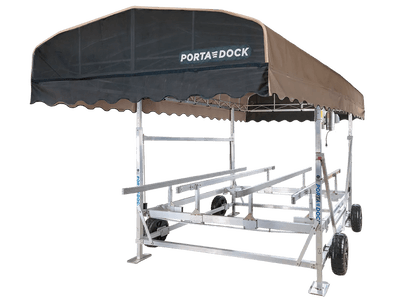
When evaluating Porta Dock vs standard boat lift systems, the differences are not cosmetic. They are structural and functional.
Porta Dock vs Standard Boat Lift: Key Differences
| Feature | Porta Dock Shallow Water Lift | Standard Boat Lift |
| Designed for shallow water | Specifically engineered for low-depth environments | Typically designed for deeper water conditions |
| Frame geometry | Frame layout maximizes lift height while maintaining lakebed clearance | Frame structure may limit lift travel in shallow areas |
| Shoreline placement | Can operate effectively closer to shore | Often requires deeper placement farther from shore |
| Height adjustability | Wider adjustment range for fluctuating water levels | Adjustment range may be limited in shallow water |
| Performance in soft lakebeds | Designed to maintain balanced load distribution | Uneven support can cause frame stress or misalignment |
| Installation and removal | Easier seasonal installation and fall removal | May require deeper placement and more adjustment |
| Material durability | Lightweight aluminum construction resists corrosion and handles freeze–thaw cycles well | Some lifts use heavier steel components that require more maintenance |
| Long-term performance | Designed to reduce strain on cables, pulleys, and frame components | Increased strain can occur when used outside ideal depth conditions |
Frame Geometry Engineered for Low Depth
A Porta Dock shallow water lift uses frame geometry designed to operate effectively in minimal depth. Crossmembers and structural components are positioned to maximize usable lift height while maintaining necessary bottom clearance.
In contrast, many conventional lifts rely on frame configurations optimized for deeper water. When placed in shallow areas, those designs limit vertical travel or require relocation farther from shore, which may not be feasible on gradual lakebeds.
The result is a system that either underperforms or introduces unnecessary strain.
Expanded Height Adjustability
Water levels on Alberta lakes do not remain fixed. Seasonal fluctuations require ongoing adjustment to maintain level positioning and safe loading.
A shallow water lift offers a wider adjustment range, allowing for precise leveling across uneven lakebeds. This expanded range reduces mechanical stress on cables, pulleys, and winch systems because the lift remains aligned rather than compensating for improper depth.
Over time, consistent alignment supports smoother operation and reduces wear.
Aluminum Construction and Durability
In any aluminum boat lift comparison in Alberta, material performance plays a major role in long-term ownership.
Aluminum frames provide:
- Corrosion resistance in freshwater environments
- Reduced overall weight for seasonal handling
- Structural consistency across freeze-thaw cycles
Steel systems, while strong, are more susceptible to corrosion if coatings are compromised. On lakes exposed to ice movement, sediment, and seasonal installation and removal, material selection influences maintenance requirements and lifespan.
Installation Advantages During Shoulder Seasons
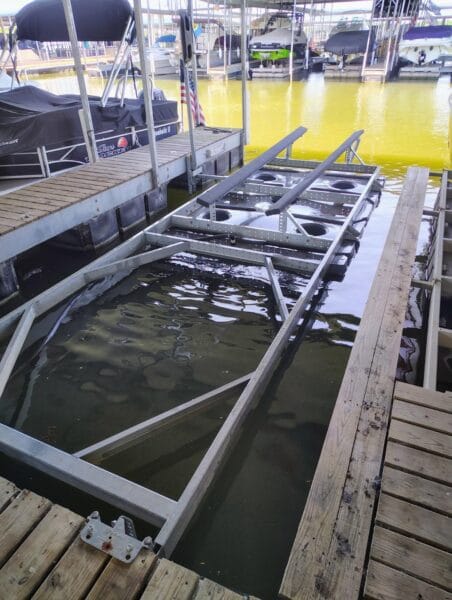
Seasonal transitions expose weaknesses in lift design.
In early spring, lake levels are often lower before runoff stabilizes depth. Sediment remains soft from thaw, and access conditions can be unpredictable. In late fall, water levels drop again as evaporation and controlled drawdowns reduce shoreline depth.
A Porta Dock shallow water lift allows installation closer to shore without sacrificing full lifting function. Because the system operates effectively in reduced depth, there is less need to push the lift farther into the lake to achieve proper clearance.
This simplifies:
- Early-season installation
- Late-season removal
- Mid-season adjustments when water levels shift
A standard lift frequently requires deeper placement to function as intended, which increases labor and complicates shoreline setup on gradual slopes.
Selecting the best boat lift for shallow lake Alberta properties directly affects seasonal efficiency and long-term structural performance.
Stability on Soft and Uneven Lakebeds
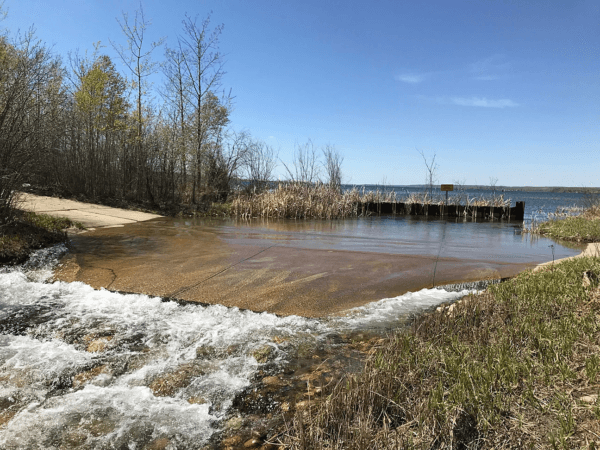
Many Alberta shorelines consist of silt, sand, or mixed sediment. Standard lifts placed in shallow areas often distribute weight unevenly, particularly when depth restricts optimal leg positioning.
Over multiple seasons, uneven load distribution contributes to:
- Frame twisting
- Cable misalignment
- Increased mechanical wear
A Porta Dock shallow water lift is designed to maintain balanced load distribution even in constrained depth conditions. Proper leveling and structural alignment support smoother mechanical operation and longer service intervals.
Stability under fluctuating water conditions directly influences the long-term cost of ownership.
Talk to Beachside Docks About the Right Lift for Your Shoreline
Instead of guessing which configuration will work, speak directly with a team that understands Alberta lake conditions.
Contact Beachside Docks to review your shoreline depth, bottom composition, and seasonal water patterns. Their team can help you compare Porta Dock vs standard boat lift options and recommend the best solution for your property.