
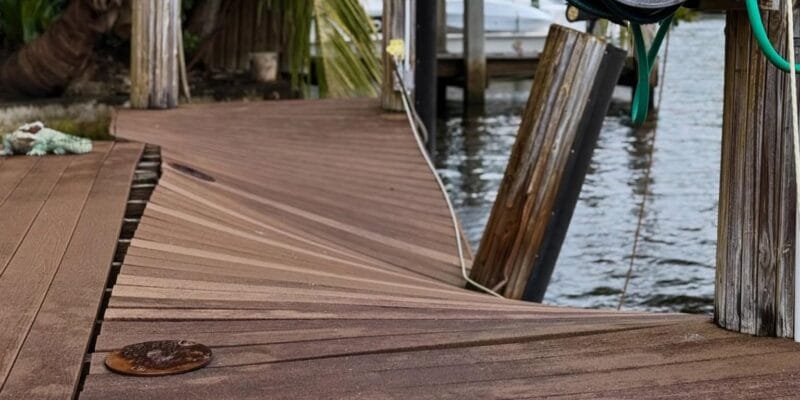
Spring is a revealing season for waterfront property owners in Alberta. When the ice pulls back and you get your first real look at your dock and boat lift, what you find can range from minor wear to serious structural concerns that developed quietly over winter.
The instinct is usually to repair. It feels practical, and sometimes it is. But there is a point where repeated repairs cost more than they save, and where an aging system becomes a liability rather than an asset. Knowing where that line sits will save you money, protect your equipment, and keep your family safe on the water.
Here is how to tell the difference.
Start With a Proper Inspection
Before you decide anything, walk the entire structure. Do this when the dock is accessible and dry. Bring something to poke and prod with and pay close attention to anything you would normally overlook mid-season when the water is up and the dock is covered in towels and coolers.
Look at every connection point. Check the decking surface for soft spots, rot, or boards that shift underfoot. Look at the frame underneath. Look at the posts or anchoring system. On your boat lift, check the cables or bunks, the motor housing, and the lift frame itself.
What you find determines everything that follows.
Signs that Repairs Still Make Sense
Not every problem calls for full replacement. Repairs are the right call when:
- The structural frame is sound and damage is limited to surface components like decking boards or hardware
- A single component has failed but the rest of the system is in good shape
- The dock is relatively new and the issue is isolated
- The repair cost is clearly lower than replacement and the fix will hold for several more seasons
Replacing a few boards, swapping out corroded bolts, or servicing a boat lift motor are all reasonable maintenance tasks. They extend the life of a system that still has good bones.
Signs that It’s Time to Replace Your Dock
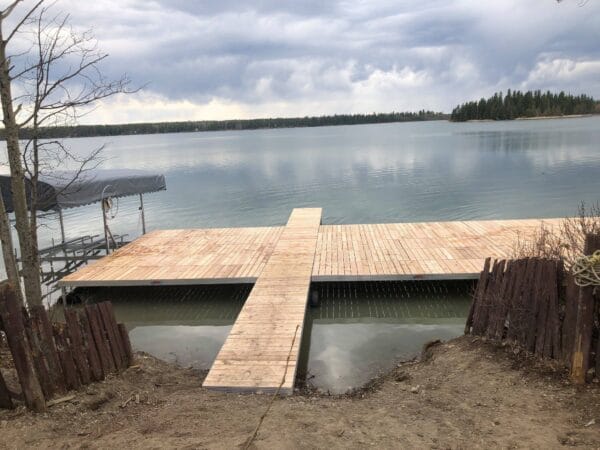
The Frame or Structure Is Compromised
Surface repairs do not fix structural problems. If the main frame members are rotting, cracked, bent out of alignment, or showing significant corrosion below the waterline, the dock is not safe. Patching the deck on top of a failing frame is like painting over rust. The underlying problem keeps getting worse.
Pressure-treated wood docks are especially vulnerable to this over time. Once the main beams go soft, the system cannot be saved through surface work.
You Are Repairing the Same Problems Every Year
If you find yourself replacing boards, re-securing connections, or re-leveling sections every spring, the dock is telling you something. Recurring issues in the same areas are a sign that the structure is fatiguing and that repairs are only buying you one more season at a time.
At some point, the cumulative cost of those annual fixes exceeds what a replacement would have cost.
The System Is No Longer Level or Stable
A dock that rocks, tilts, or sits noticeably uneven is a hazard. Poor stability can cause slips and falls, makes loading and unloading boats more difficult, and puts stress on your boat lift if it is not operating on a level surface. If leveling attempts are not holding season over season, the foundation of the system has likely shifted beyond what adjustments can be corrected.
Corrosion Has Reached Critical Components
Surface rust on hardware is manageable. But when corrosion has worked into the main structural components, particularly on older steel lift frames or in submerged connection points, it degrades the load capacity of the entire system. Corroded steel cables on a boat lift are a direct safety risk that cannot be addressed with surface treatment alone.
Signs That It’s Time to Replace Your Boat Lift
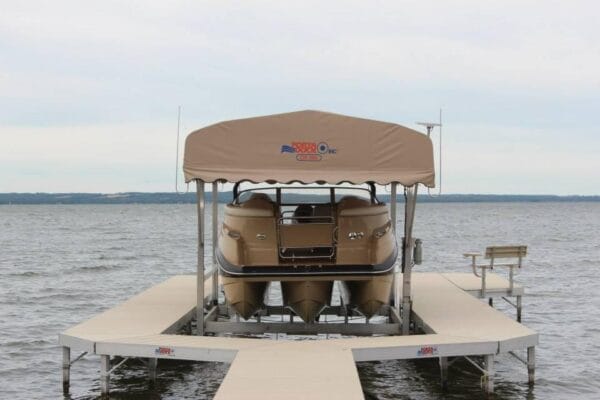
The Lift Struggles to Raise or Hold Your Boat
A boat lift that strains, moves unevenly, or cannot hold your boat at full capacity is not performing its core function. If the motor is working properly but the lift still struggles, the problem is usually in the frame, the cables, or the overall capacity of the system. Upgrading to a modern lift rated for your current boat is a straightforward fix for a problem that will not go away on its own.
The Frame Is Visibly Bent or Twisted
Lift frames take a lot of stress over a season. Ice pressure in particular can rack a frame out of alignment in ways that are difficult to reverse. A bent frame affects how the lift distributes weight and how reliably your boat is supported. Once the geometry of the frame is compromised, the lift cannot operate the way it was designed to.
The System Was Not Built for Your Current Boat
Many boat lift replacement decisions in Alberta come down to a simple mismatch. If you have upgraded your boat since installing the lift, or if you purchased a property with an older lift that was sized for a different vessel, the lift may not be rated for what you are putting on it. Running an undersized lift shortens its lifespan and creates real risk of failure at the worst possible moment.
Why Aluminum Dock and Lift Systems Are Worth Considering
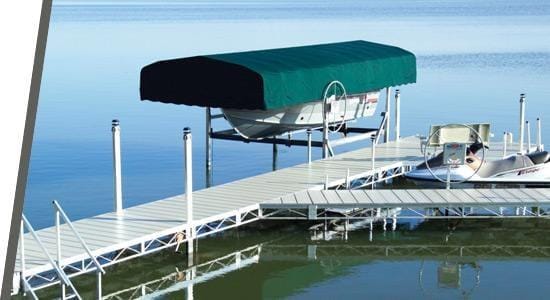
If replacement is the right call, modern aluminum dock and lift systems offer a meaningful upgrade over older wood or steel alternatives.
Aluminum does not rot and does not rust. It handles Alberta’s freeze-thaw cycles better than wood and does not require the same level of seasonal maintenance. Aluminum dock systems are modular, which makes them easier to reconfigure as your needs change. Aluminum lift frames are lighter than steel, easier to service, and hold up well in both fresh and brackish water conditions.
The upfront cost is higher than a basic repair, but the long-term maintenance savings and extended service life make the comparison closer than it first appears.
Get Prepped for Spring
Repairs are the right answer until they are not. If your dock or boat lift is structurally sound and the issues are isolated, fix them and get back on the water. But if you are dealing with a compromised frame, recurring failures, alignment problems, or a system that no longer fits your boat, replacement is the more practical decision.
Spring is the right time to make that call. Getting ahead of the problem now means you are on the water when the season opens, not waiting on parts or patching something that will not last the summer. Contact Beachside Docks today for a free quote.